


Understanding the farrowing process of sows and recognizing the signs of the different stages of farrowing will help us plan management strategies to improve the survival rates of newborn piglets.
The ultimate measure of success in a breeding herd is to produce a litter with many live piglets. The total number of piglets born, or litter size, ranges from 14-16 and has been increasing over the years. However, an increase in litter size comes with the risk of more stillborn piglets. If farms know when sows are farrowing, they can improve piglet survival rates by intervening during the farrowing process. The gestation period for modern sows is 115-116 days, but it usually ranges from 112-119 days.
Increasing litter size is not related to gestation length, but it is associated with longer farrowing times and an increased risk of stillborn piglets.
Synchronized farrowing can facilitate herd turnover and enhance labor efficiency. Farms can induce farrowing with prostaglandins the day before the expected farrowing date (day 114) for those sows that have not started farrowing by day 116, or prevent early farrowing on days 112-114 by using oral progestogens. However, it is still not possible to predict which sows will farrow early, on time, or late.
In the weeks before farrowing, the rapid development of the fetuses causes the sow’s abdomen to significantly enlarge, while the mammary glands also develop and enlarge.
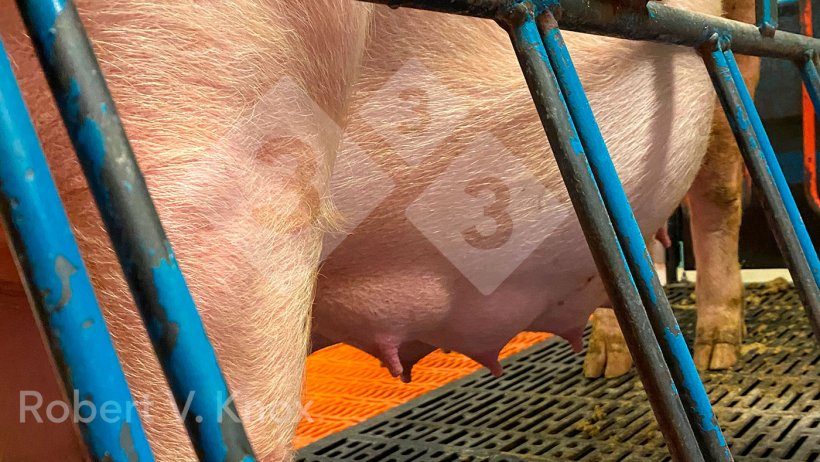
Figure 1. Mammary Gland Development
In the days before farrowing, a small amount of colostrum may drip from the nipples, and a few hours before giving birth, milk may squirt from the nipples.

Sows may exhibit arching of the back, and the vulva may become swollen, red, and dilated.
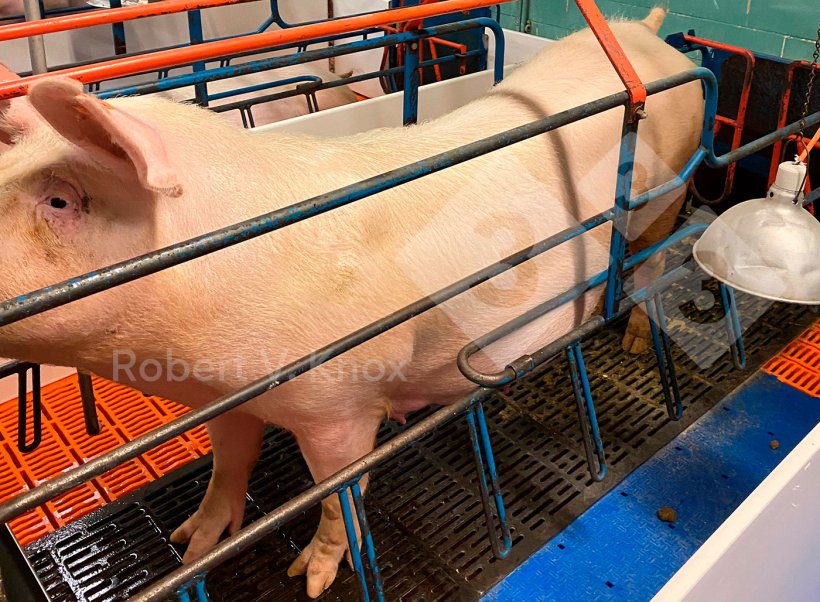
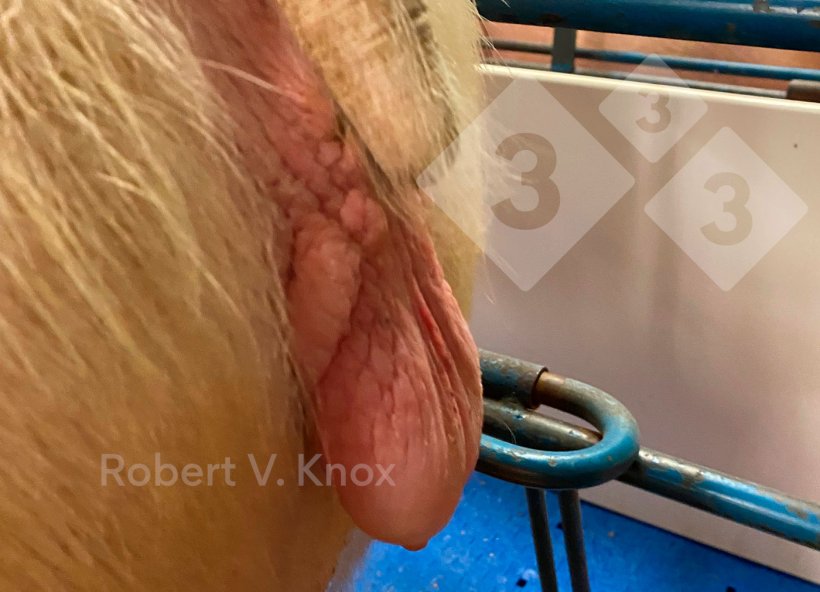
Before giving birth to the first piglet, the sow becomes restless and repeatedly stands up and lies down before finally lying on her side to give birth.
As farrowing approaches, the respiration rate will increase from ~20 to over 60 breaths per minute.
Hormonal Regulation at Birth
While progesterone continues to increase until just before farrowing, placental estrogen rises in the weeks prior. Other hormones, such as prostaglandin, relaxin, prolactin, and oxytocin, increase in the days and hours leading up to farrowing. Estrogen and relaxin work together to dilate the birth canal by weakening the connective tissues in the pelvis, cervix, and vulva.
The signal to start farrowing originates from the maturity of the piglet’s brain, leading to the release of cortisol from the fetal adrenal glands. This causes an increase in placental estrogen and the release of uterine prostaglandin. High levels of progesterone support the nourishment of the fetus in the uterus while suppressing uterine contractions. The release of prostaglandin destroys the corpus luteum, and progesterone is eliminated within 12-24 hours. Without progesterone, strong uterine contractions are induced, supported by prostaglandin and oxytocin, to expel the first piglet and bring the placenta into the cervix. Once most of the placenta is attached to the uterus, contractions cause the piglet’s feet to rupture the amniotic sac and expel the fluid.
The Farrowing Process
Once the fetus reaches the cervix, a reflex causes the sow to push using abdominal muscles (evidenced by the sow extending its hind legs) to expel the piglet through the birth canal.
The farrowing process is regulated so that at each moment, only one piglet enters the birth canal while all the other piglets remain in position. The order of birth from the right or left uterine horn is random, and whether the piglet is born head-first or tail-first has no correlation with the survival rate of the piglets during and after birth.
Contractions are regulated in terms of frequency, intensity, direction, duration, and the layer of muscle activated. Neural signals from the sow’s reproductive tract regulate oxytocin and abdominal pushing, while local control from the placenta and uterus regulates hormones and receptors to stimulate or inhibit contractions. Contraction regulators include oxytocin, estrogen, progesterone, prostaglandin F2 and E2, nitric oxide, and calcium.
Each farrowing involves a peak in oxytocin levels, with piglets being born approximately every 15-20 minutes. However, piglets can be born consecutively or with intervals of more than 30 minutes. Piglets are often born still attached to the umbilical cord and with some amniotic sac remnants.
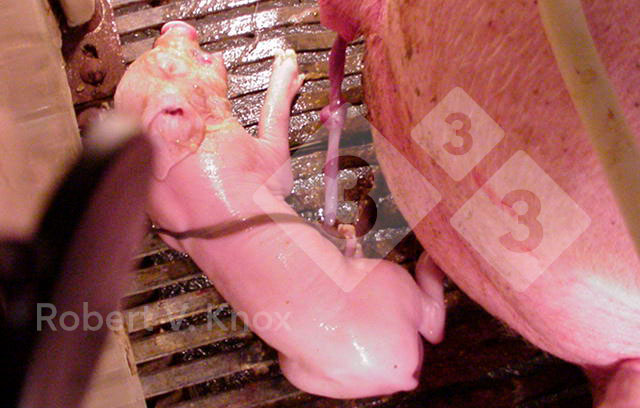

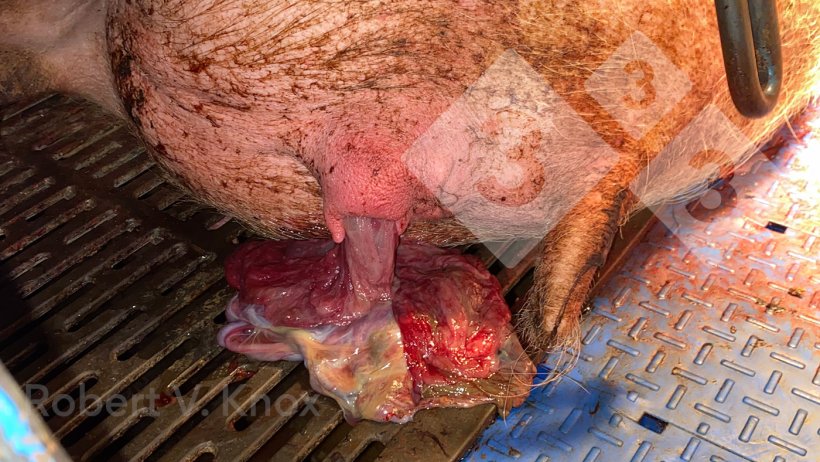
Stillbirth/Stillborn Piglets
During farrowing, stillbirth is a significant concern because timely intervention can save one piglet/sow/year. Stillbirth occurs more frequently in the last third of the litter and in sows with short (<113 days) or long (>117 days) gestation periods. Stillbirth is associated with reduced contractions and exhaustion in sows, particularly when farrowing takes longer and the sow endures extended periods of stress while pushing out piglets.
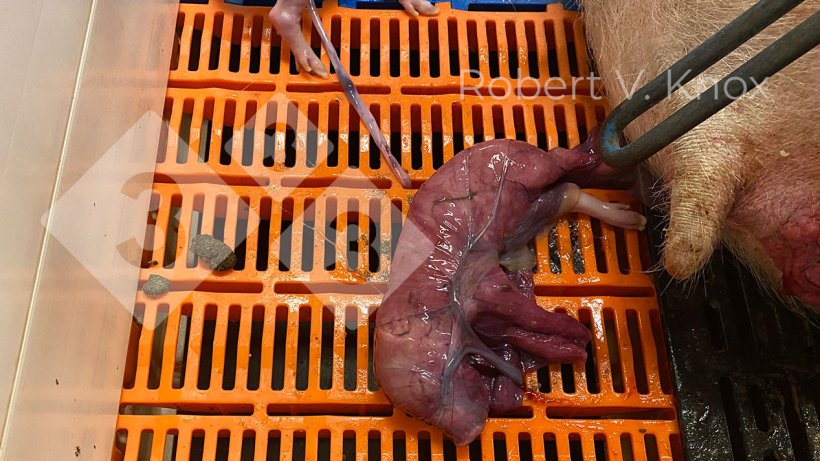
One sign of a problem is when the interval between the last piglet born and the next increases beyond 20 minutes, and the sow appears stressed. Piglets may die from a lack of oxygen due to an umbilical cord that is ruptured or because blood circulation is restricted during prolonged contractions. Over 50% of stillborn piglets die from ruptured umbilical cords and lack of oxygen before or after entering the birth canal. For the last piglets in the litter, the distance, timing, and tension of the umbilical cord can contribute to cord rupture. Since the half-life of oxygen is only 5 minutes, timely intervention requires knowledge of the timing of births and observations of the sow.
Understanding the processes controlling farrowing and recognizing the signs of different stages of labor can help farms develop effective management plans for sows, facilities, and manpower to improve piglet survival rates.
SOURCE: 3tre3